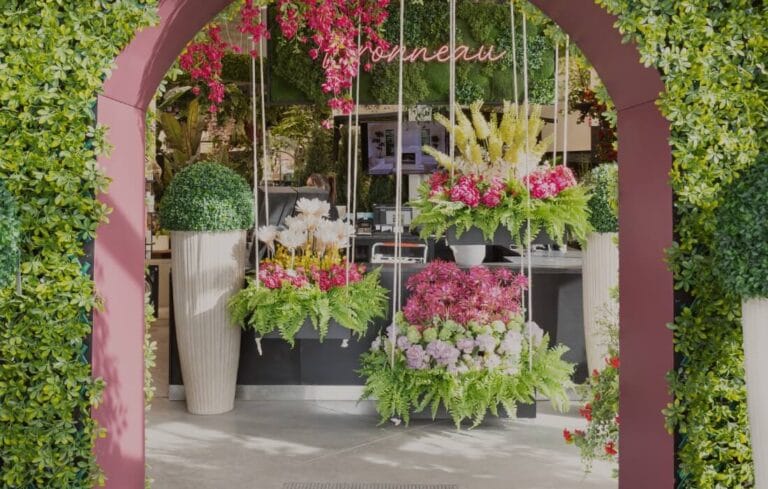
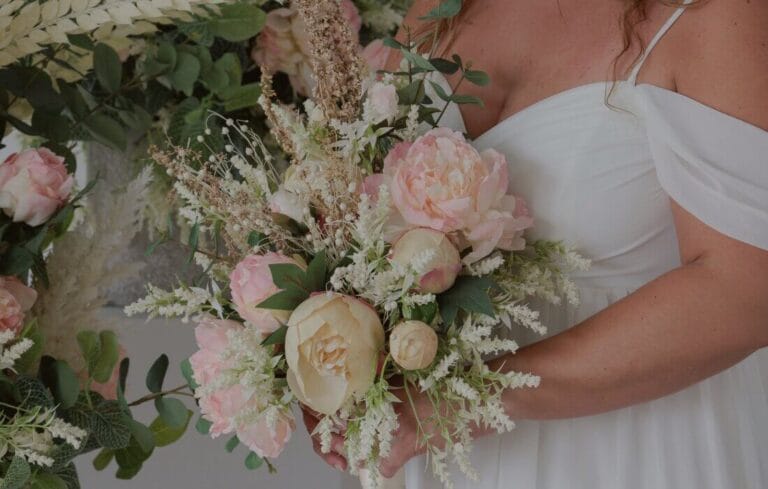
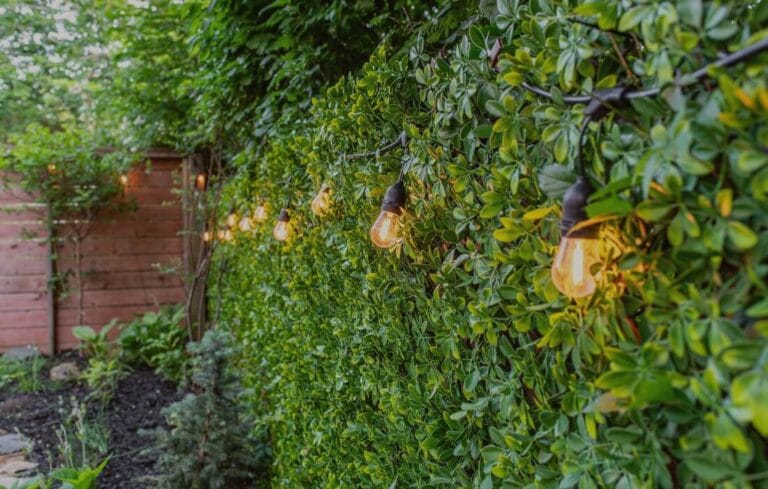
On a terrace or a balcony, outdoor plants reveal their full value when they are grouped together. They then create a more harmonious, natural, and welcoming setting, capable of instantly transforming the space. In this article, we explain how to create arrangements of artificial plants and flowers to enhance your outdoor space.
Why group potted plants together?
Placing a single plant in a corner can sometimes leave a feeling of emptiness. By combining several potted outdoor plants in the same space, the effect is much more generous and decorative.
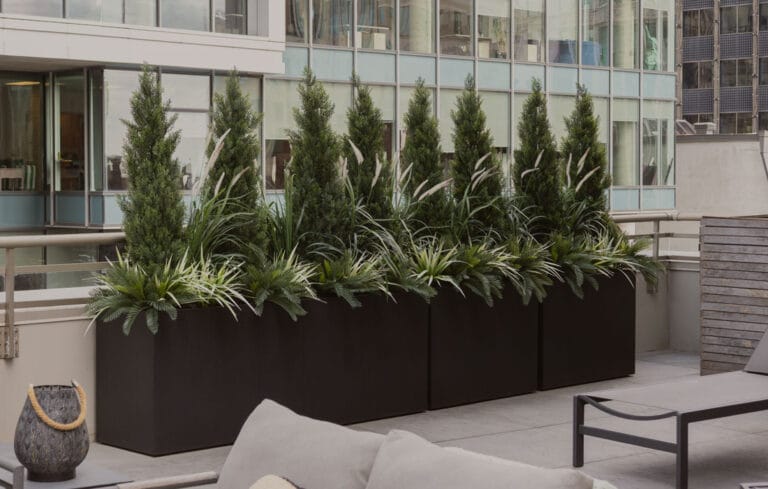
Grouping plants also helps structure the terrace and create a well-organized outdoor plant layout. For example, they can draw attention to a relaxation corner, highlight a table, or fill an empty corner. This approach mirrors how plants grow naturally—in clusters or small groups rather than isolated.
The rule of three for beautiful plant groupings
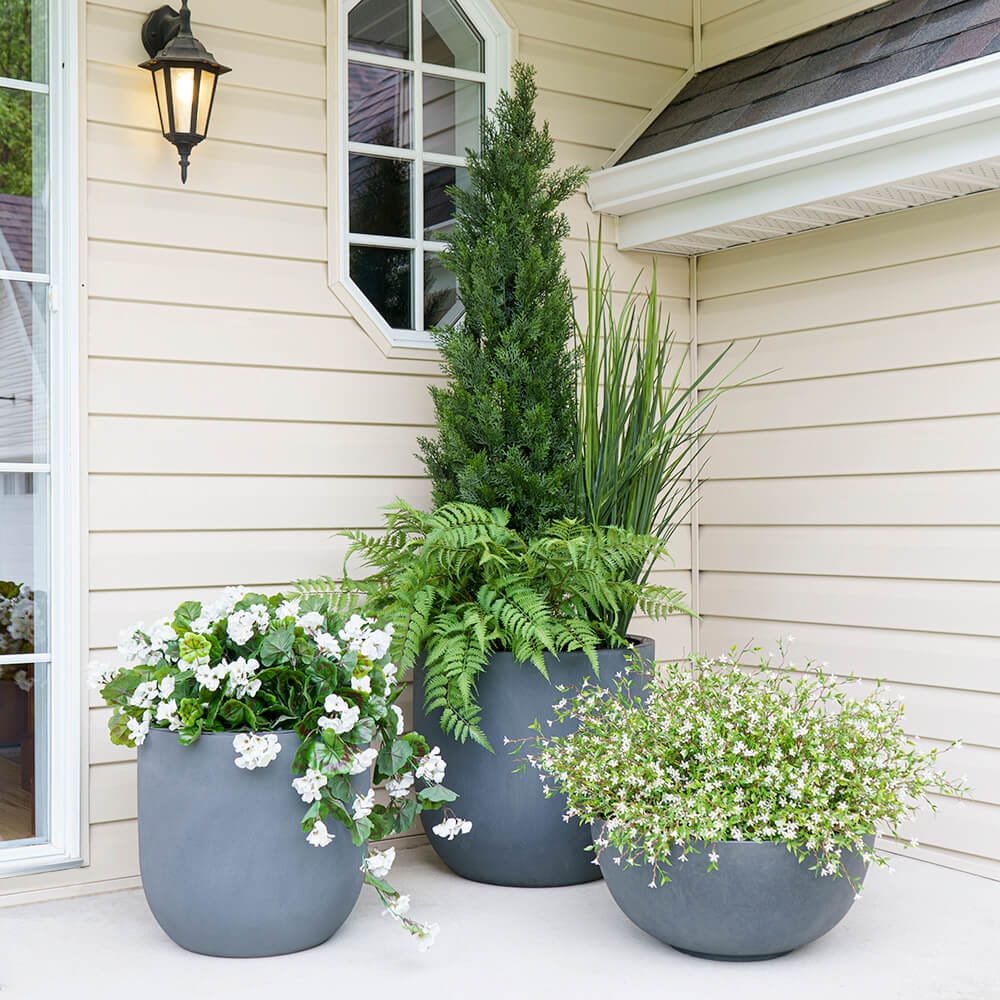
A simple way to create a beautiful outdoor plant composition is to form groupings of three elements. This rule, widely used in outdoor design, helps achieve a natural visual balance.
For example, you can combine:
- A tall plant to provide structure
- A medium-sized plant
- A lower or trailing plant
This combination creates a more dynamic composition than a row of plants of the same height.
Varying heights for a more dynamic terrace layout
Height variation is one of the most important elements to give depth to a plant grouping on the terrace.
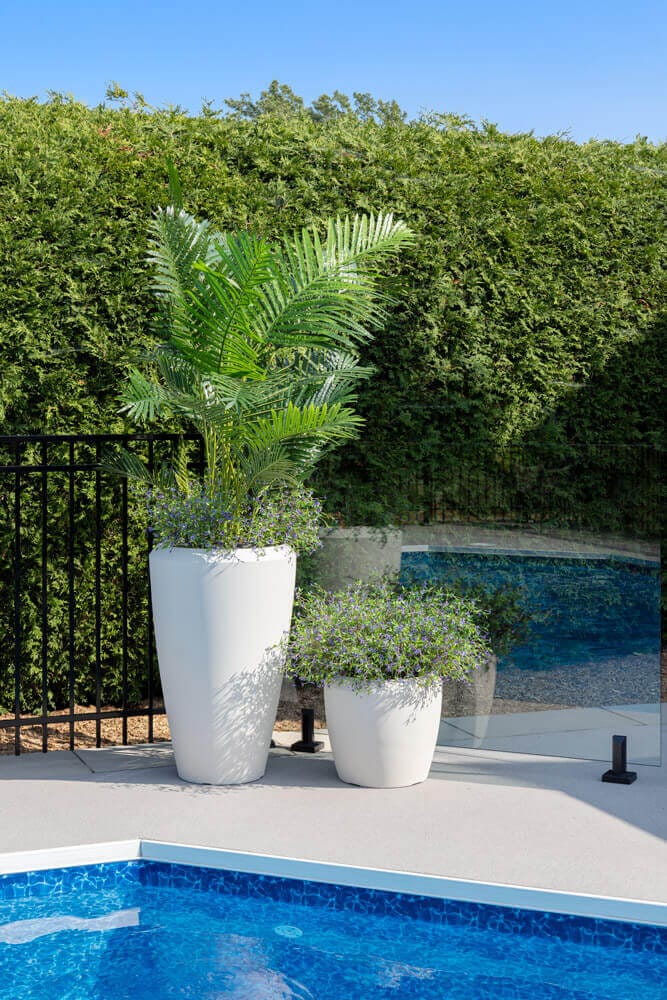
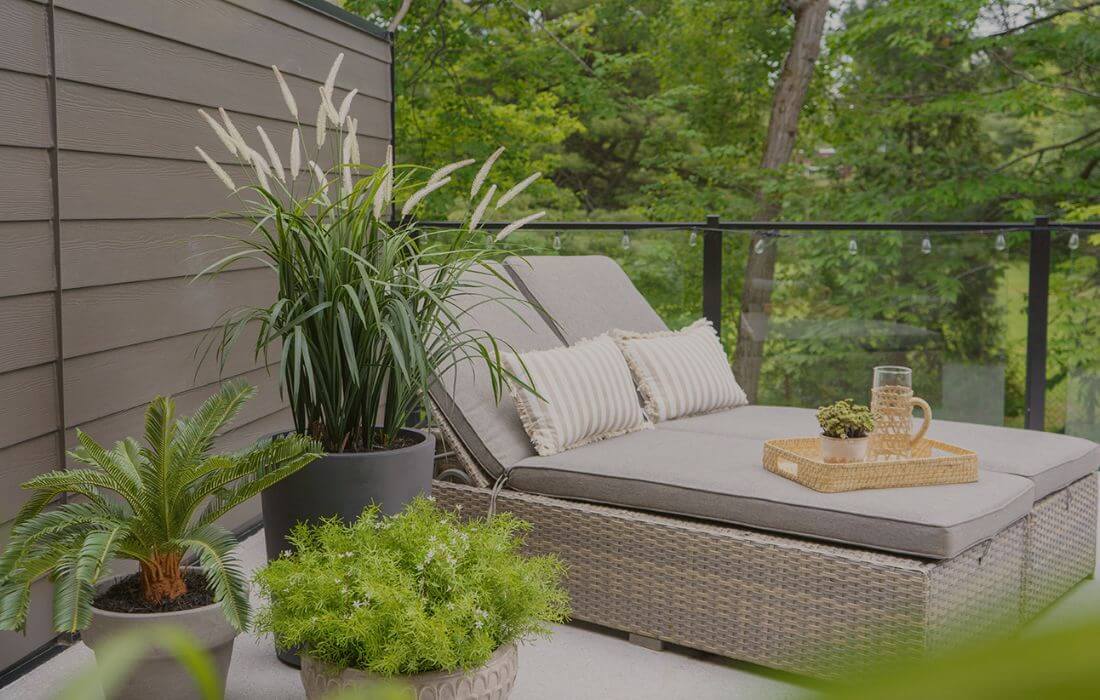
A tall plant at the back can serve as a visual anchor. In front of it, a medium-sized plant adds volume, while a low or trailing plant softens the base. This layering gives the impression of a richer decor and avoids a static look.
On a terrace, you can also create height differences using outdoor planters of various sizes or placing some plants on a small stand or piece of furniture.
Which plants work well together in pots?
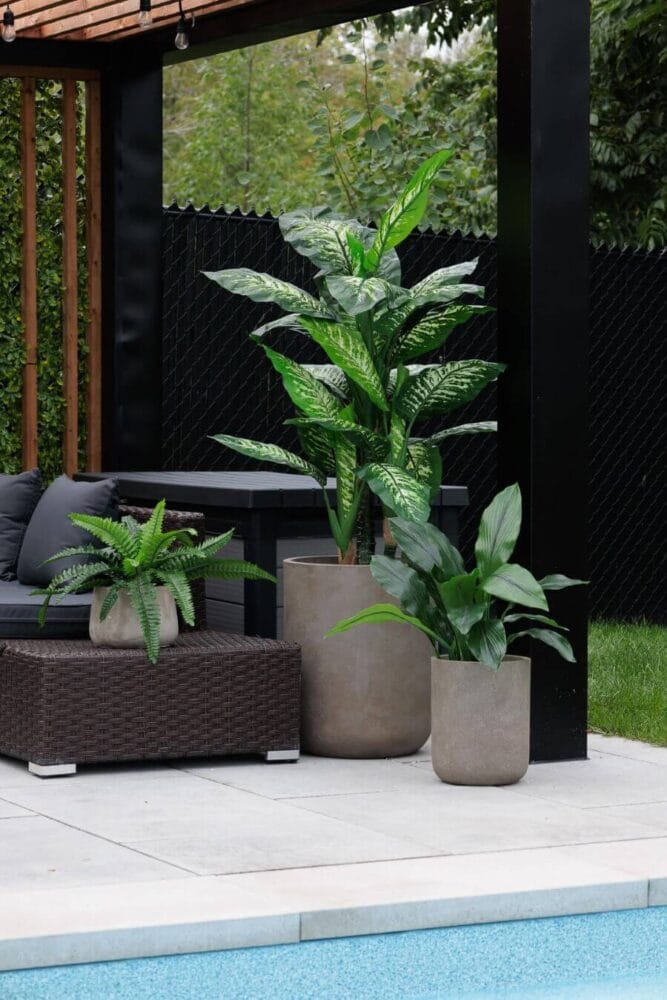
On a terrace or balcony, you can pair a tall plant—such as a palm, dieffenbachia, or ornamental grass—with a medium-sized plant like a cycas, sansevieria, or turmeric plant, and a low plant such as ivy foliage, fern, or lavender.
Mix foliage and flowers to enrich the composition
Foliage provides structure and texture, while flowers add color accents that draw the eye.
For a successful terrace plant arrangement, it’s interesting to combine different foliage shapes—broad, slender, or compact—with a few flowering plants. You don’t need many: just a few colorful accents are often enough to transform the composition.
Harmonizing outdoor planters
Containers play a key role in the overall style of a grouping. Well-chosen outdoor planters help create a cohesive arrangement.
You can go for similar materials—like ceramic, rattan, or fiber—or choose colors that complement each other. Slightly varying the sizes and types of containers (rectangular boxes, hanging planters, round pots) also helps create visual rhythm while maintaining unity.
How to arrange a terrace with flower pots
Plant and flower groupings can be placed in various locations to structure the space:
- In an empty corner that lacks life
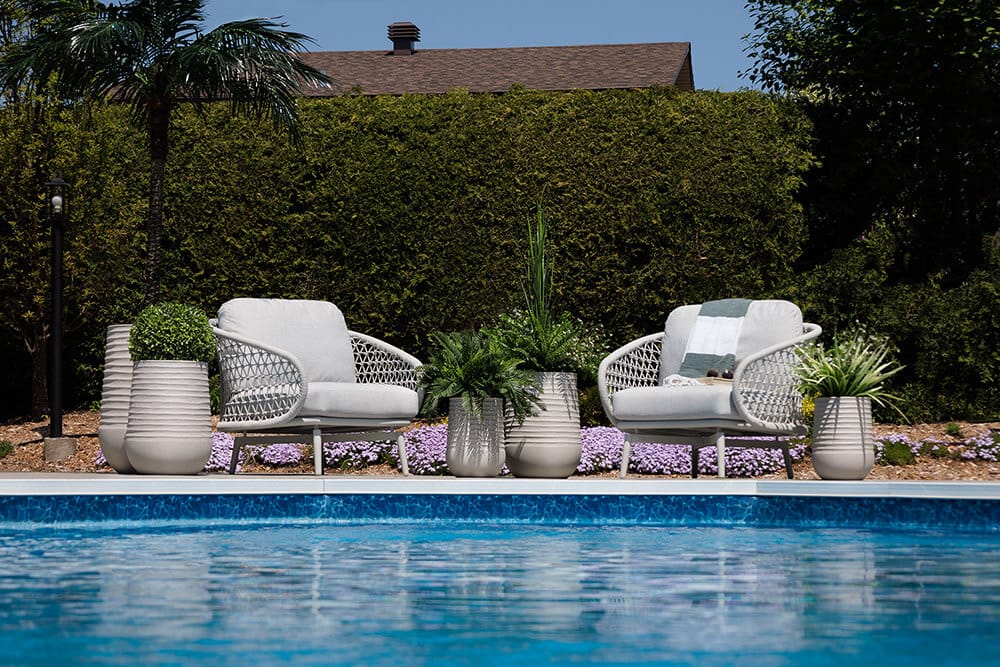
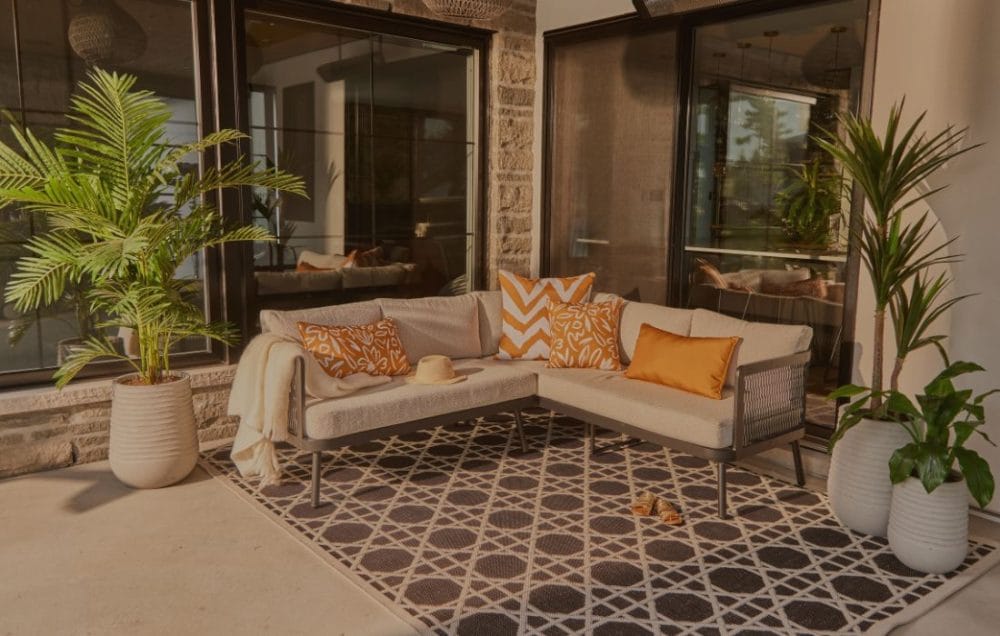
- Near a relaxation area to create a cozier atmosphere
- Around a table to soften the layout
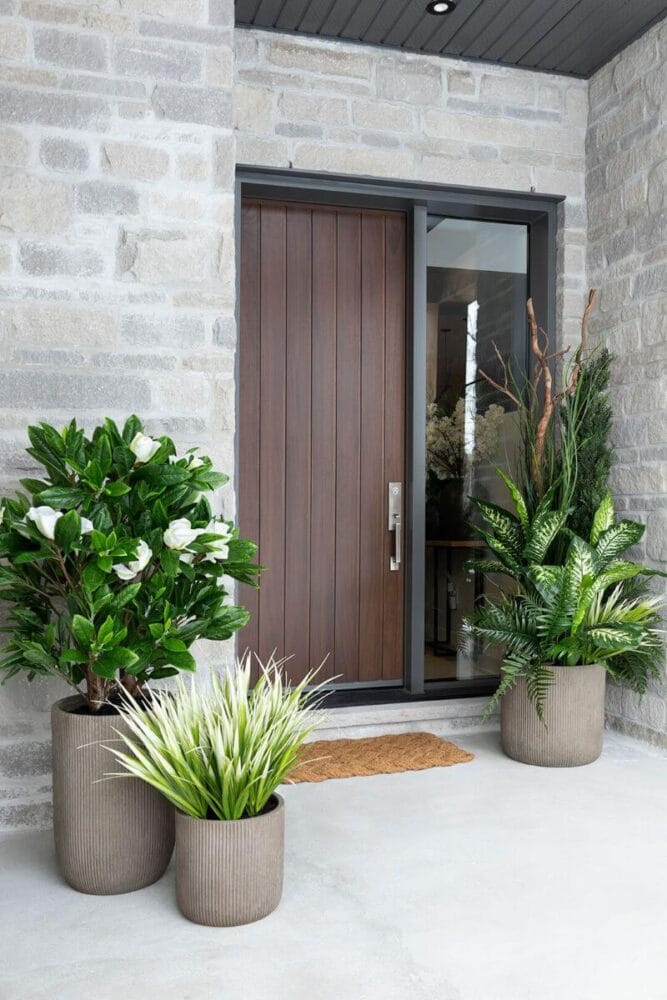
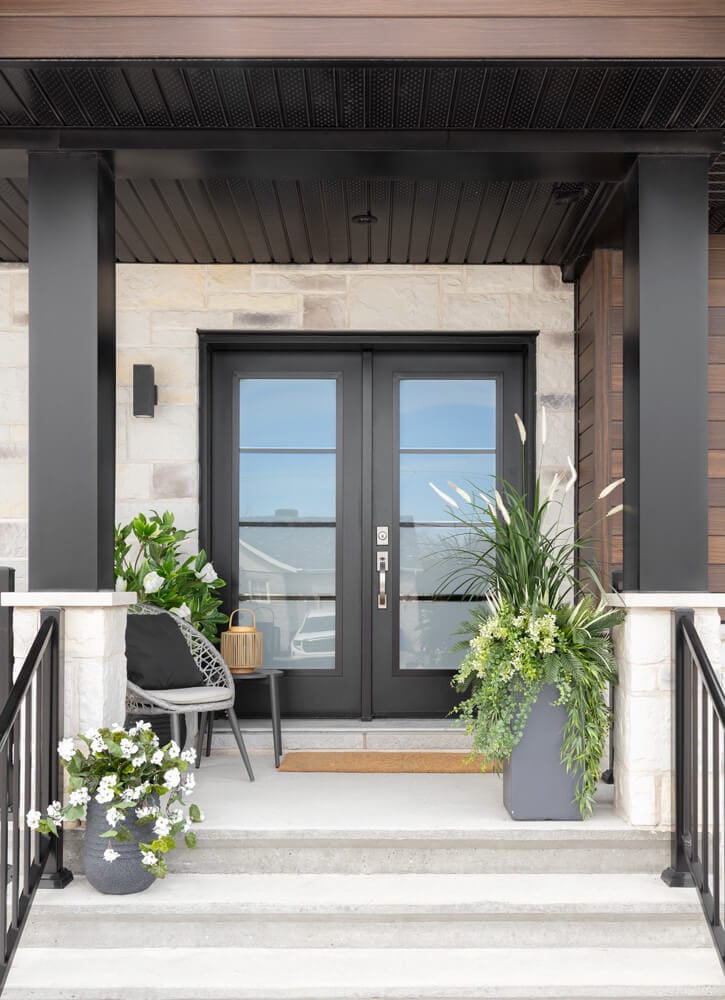
- Near a patio door to frame terrace access
Rather than spreading plants evenly, it’s often better to create a few generous groupings that naturally draw attention.
The advantage of outdoor artificial plants
Outdoor artificial plants are particularly well-suited for this type of composition. Always full and in perfect condition, they allow for generous groupings without worrying about watering, sunlight, or flowering seasons. They also offer the freedom to combine different plants and maintain a lush terrace from the beginning to the end of the season.
Explore our selection of outdoor plants and arrangements to find inspiration that will enhance your terrace or balcony.